


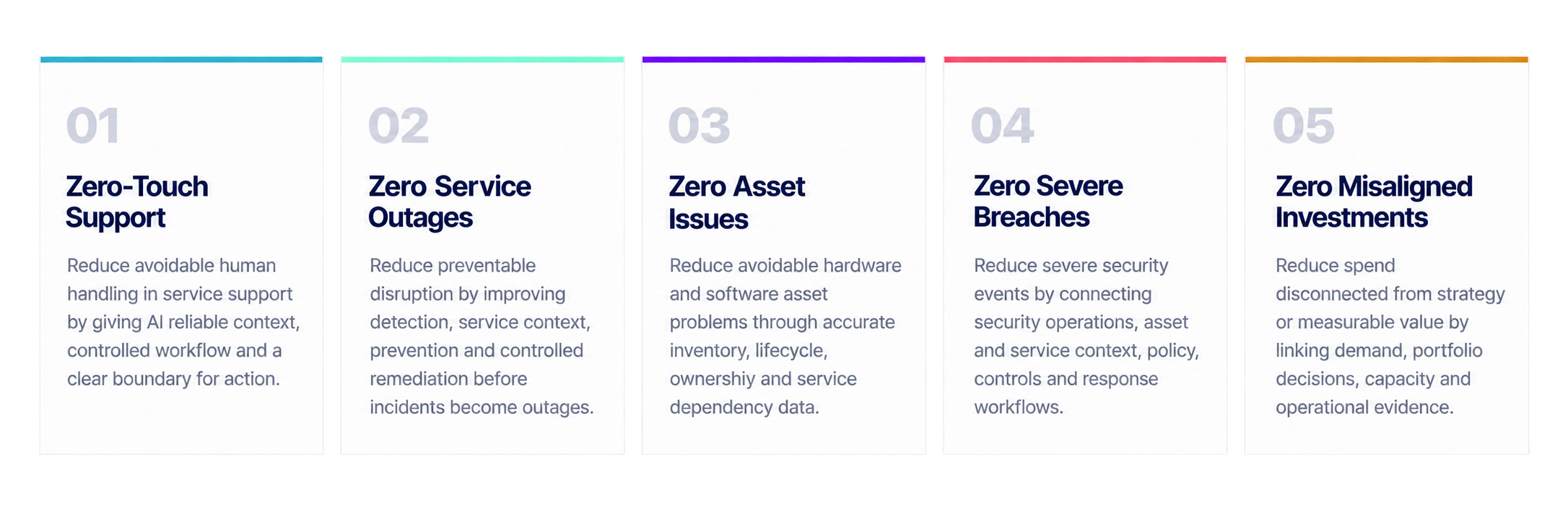
Short answer: The Five Zeros are measurable operational outcomes for Autonomous IT: zero-touch support, zero service outages, zero asset issues, zero severe breaches and zero misaligned investments. They are outcomes to work toward, not five products to buy.
Crossfuze's Road to Zero connects those outcomes to a practical decision: how ready is your ServiceNow estate to let AI act, which Zero should come first, and what must change before you increase autonomy?
Read the full guide, The Road to Zero, for the readiness framework and the five Zeros in detail.
THE BOTTOM LINE
Autonomous IT is a readiness, control and outcome decision. The strongest starting point is the smallest credible outcome you can prove with trustworthy data, controlled workflows and clear accountability.
THE BOTTOM LINE
Autonomous IT is a readiness, control and outcome decision. The strongest starting point is the smallest credible outcome you can prove with trustworthy data, controlled workflows and clear accountability.
✓ A self-check: how ready are you, really, function by function
✓ The four foundations: data, workflows, governance, operating model
✓ Two pathways: Autonomous IT and Business Re-Invention (CBS)
The Five Zeros
The Five Zeros are outcome targets, not products. Each defines a measurable operational result that greater autonomy should help the organisation achieve.
Each answer leads with the bottom line, then adds the decision logic behind it.
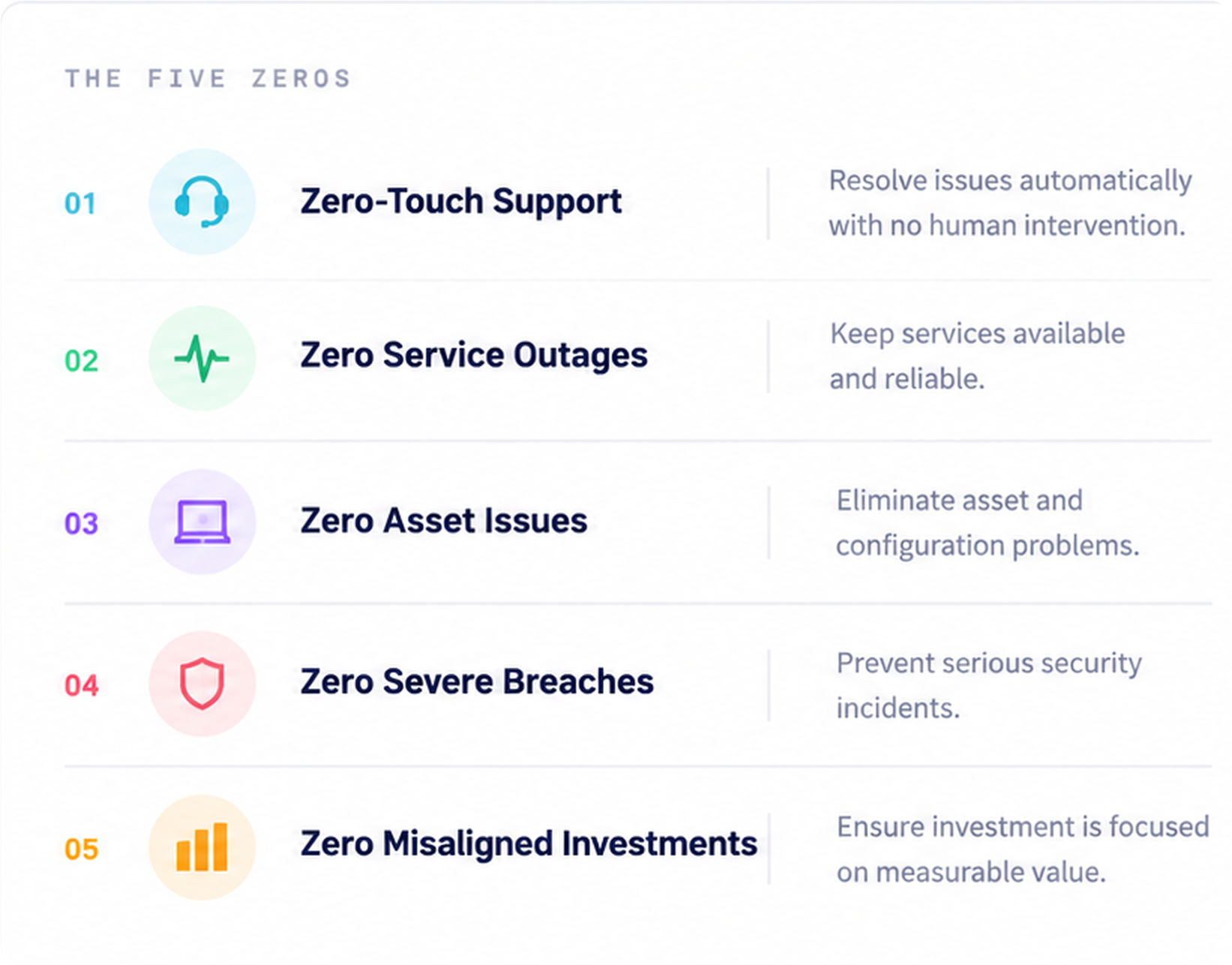
The Five Zeros are measurable operational outcomes: zero-touch support, zero service outages, zero asset issues, zero severe breaches and zero misaligned investments. They describe what Autonomous IT is trying to improve, rather than five separate AI products.
Crossfuze uses the Five Zeros as the outcome layer of the Road to Zero. The practical question is not whether every organisation should chase all five at once, but which Zero has the strongest combination of business value, readiness and evidence in your estate.
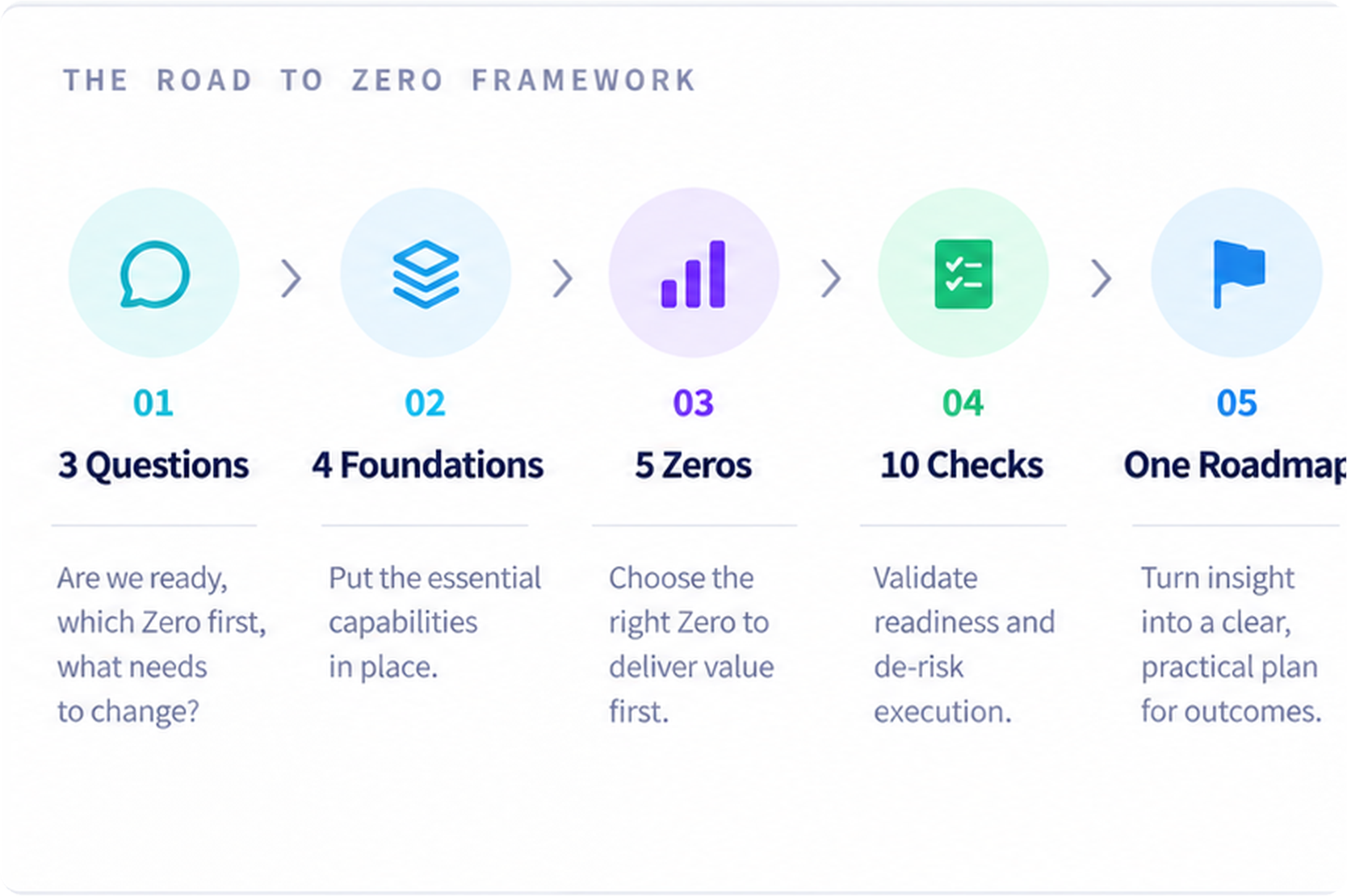
The Road to Zero is Crossfuze's practical framework for moving from AI capability to trusted operational outcomes. It assesses ServiceNow AI readiness, helps choose the right Zero to pursue first and progressively earns greater permission to automate.
The framework is organised around three decisions: Are we ready for Autonomous IT? Which Zero should we tackle first? What needs to change, and how does it get done?
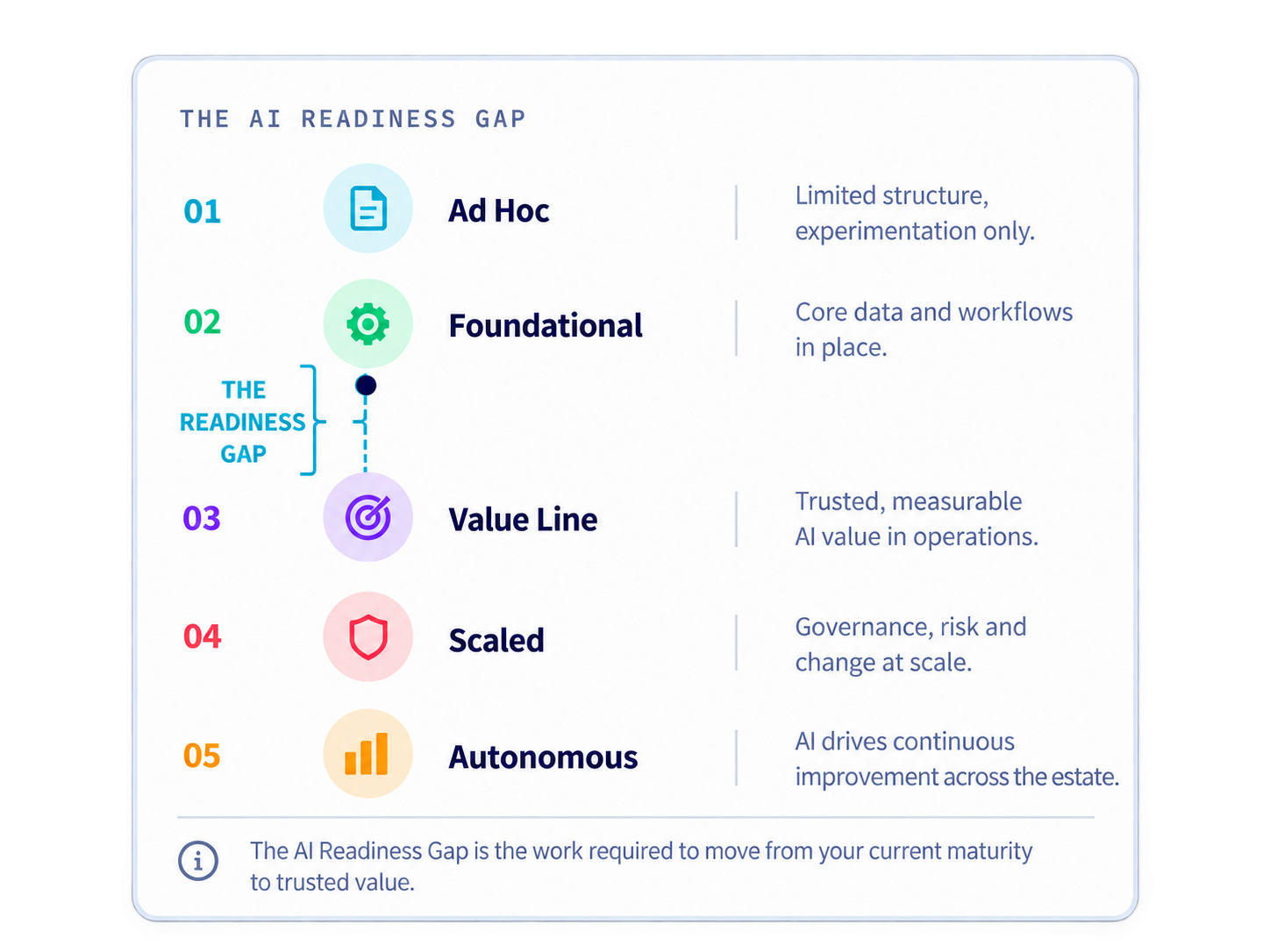
The ServiceNow AI Readiness Gap is the distance between what ServiceNow AI can technically do and what your organisation can safely let it do. Buying access to AI does not automatically make the estate ready for autonomous action.
The gap shows up when AI lacks trustworthy service context, workflows are fragmented, authority is unclear, controls arrive too late or there is no operating model for ownership and accountability.
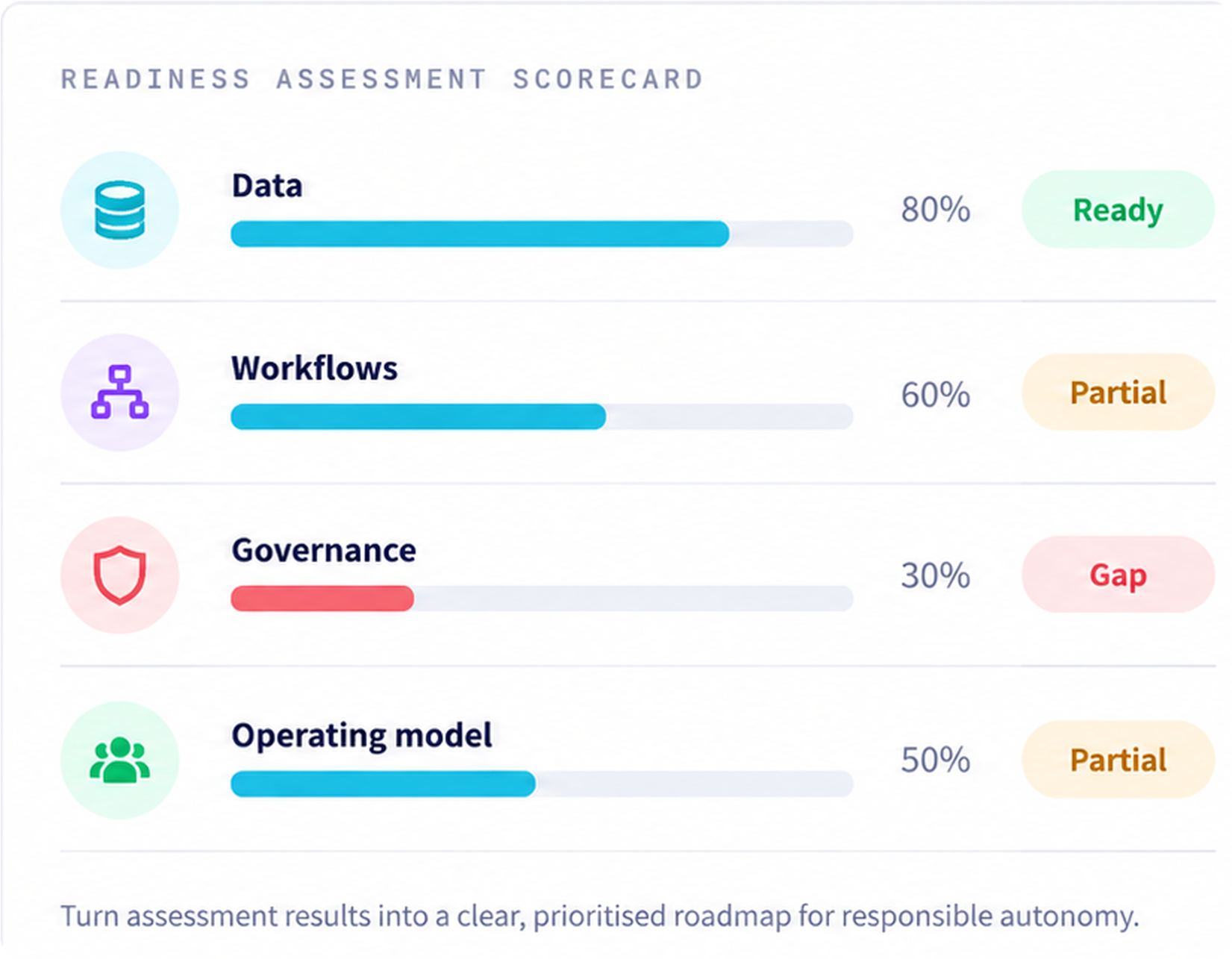
Assess readiness on evidence across four foundations: data, workflows, governance and operating model. Then define what AI is allowed to do without a human, how the action is monitored and how the organisation can stop, override or recover when necessary.
Crossfuze's readiness rule is simple: score what the estate can demonstrate, not what teams intend to build. The weakest foundation sets the practical ceiling for autonomy.
Related guide check: Where is our weakest readiness foundation today?
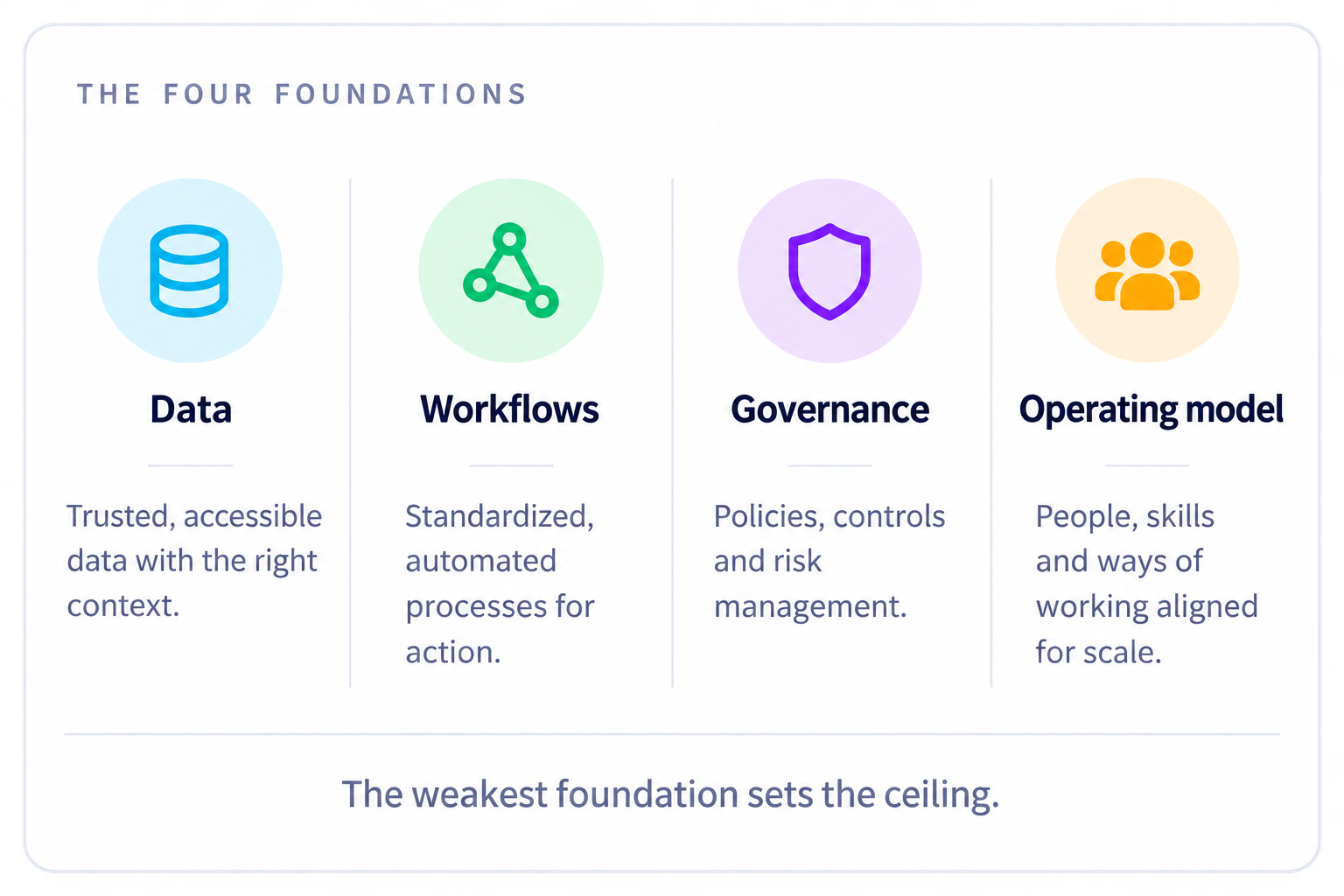
They determine whether AI has the context, path, permission and accountability required to act safely. Data provides reliable context. Workflows define how action occurs. Governance sets authority and control. The operating model establishes ownership, review and accountability.
A weakness in any one foundation can constrain the whole system. That is why the Road to Zero treats readiness as an operational control problem, not simply a technology deployment.
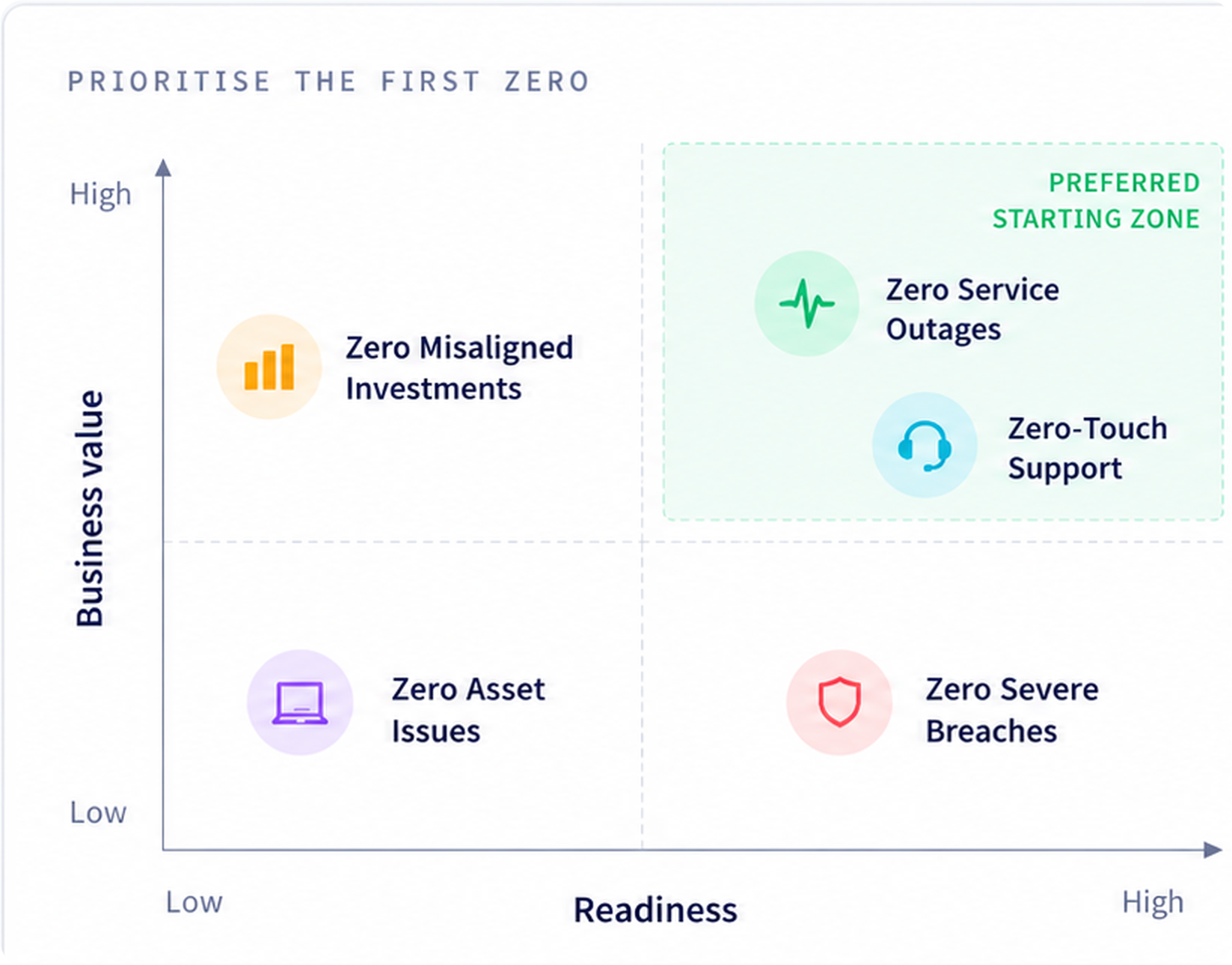
Start where business pain, platform readiness and measurable operational evidence overlap. The best first Zero is the smallest credible outcome that matters to the business and can be improved under control.
Prioritisation should consider the value of the problem, the ServiceNow capabilities already present, the quality of the data and integrations, and whether you can measure a baseline and the result.
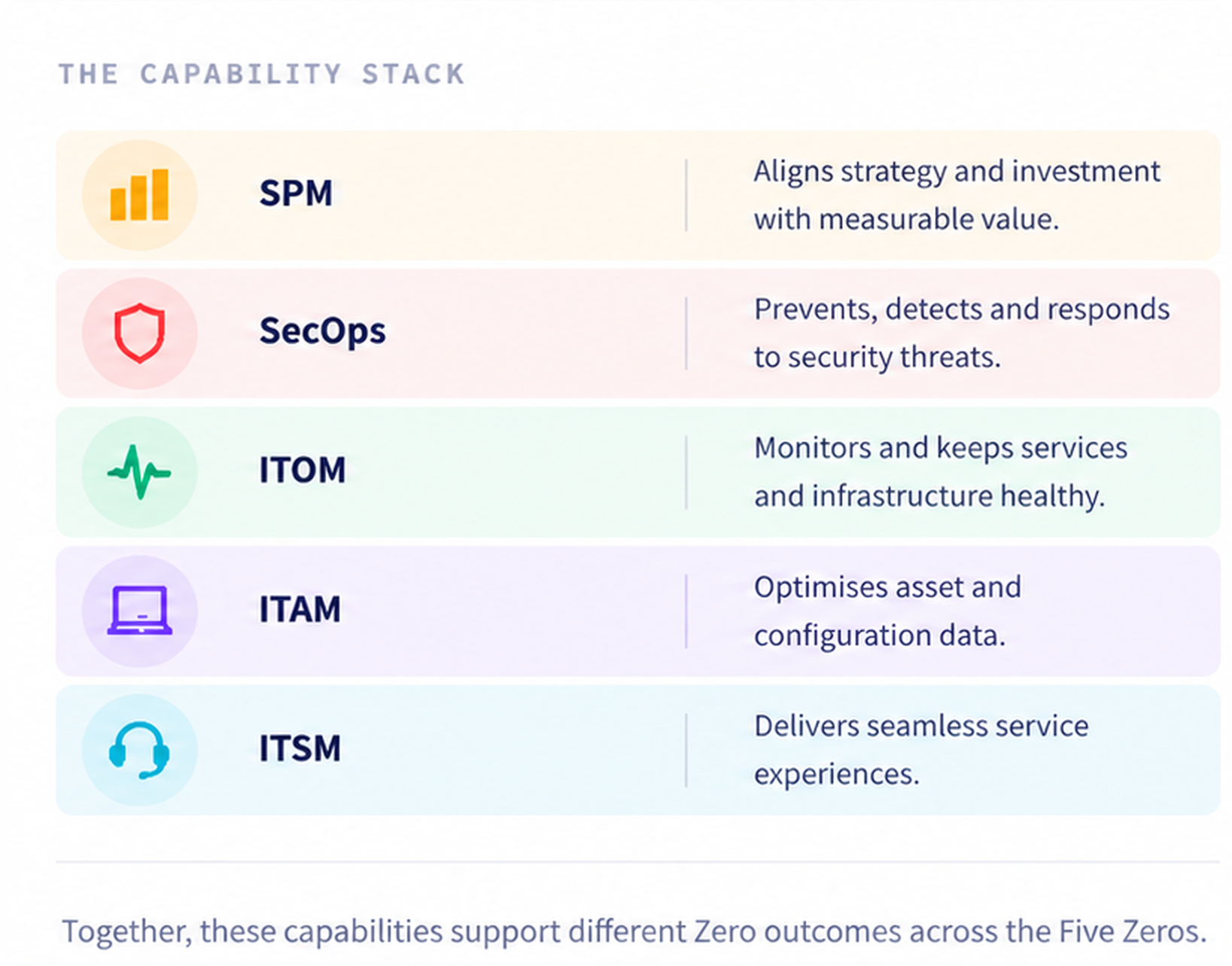
The Five Zeros depend on connected ServiceNow capabilities rather than one module. ITSM provides core service workflow, while ITOM, ITAM, SecOps and SPM add the operational, asset, security and portfolio context required by different outcomes.
The Road to Zero therefore maps each outcome to the smallest credible capability stack needed to support it. More technology is not automatically better; the stack should be no larger than the outcome requires.
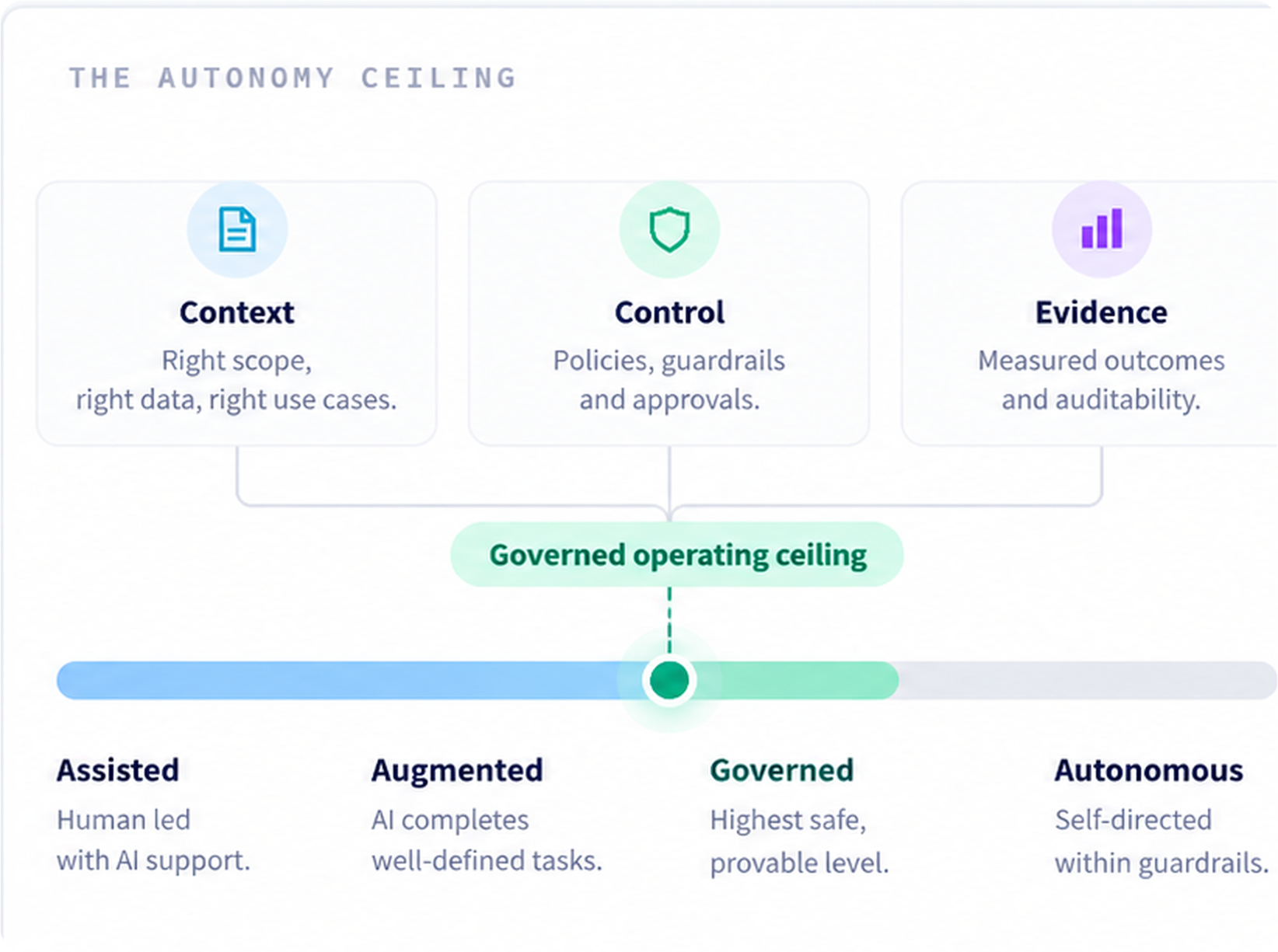
The goal is not maximum autonomy. It is the highest level of autonomy that can be safely operated, evidenced and governed, with explicit limits and clear human accountability.
Permission to automate should expand only as the estate proves it can provide reliable context, controlled execution, monitoring, evidence and recovery.
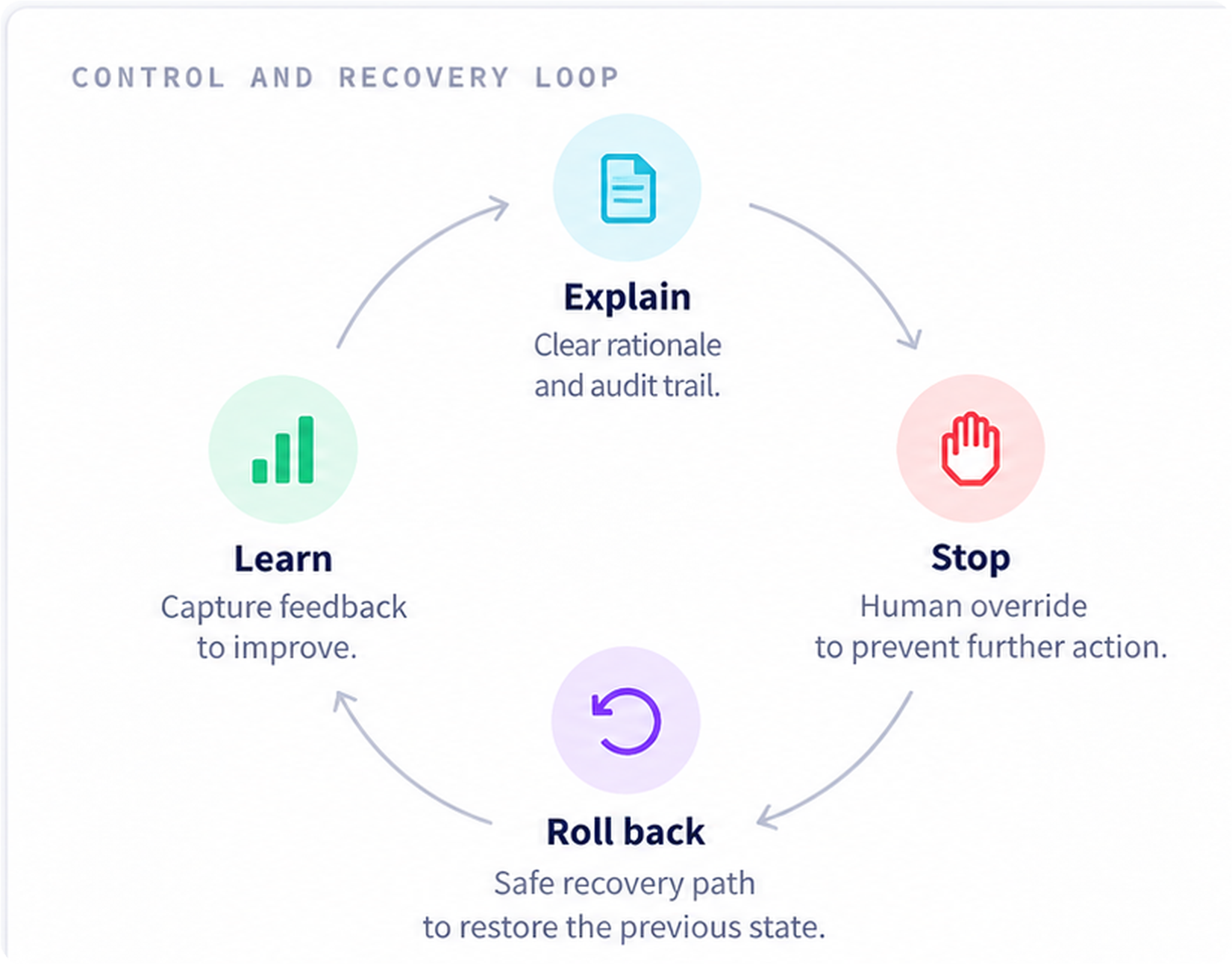
The action must be explainable, observable and recoverable. The organisation needs to know what the system understood, what it changed, why it acted, which controls applied and what happened afterwards.
There should also be monitoring, a clear way to stop or override autonomous action, a rollback path and named people accountable for review and assurance.
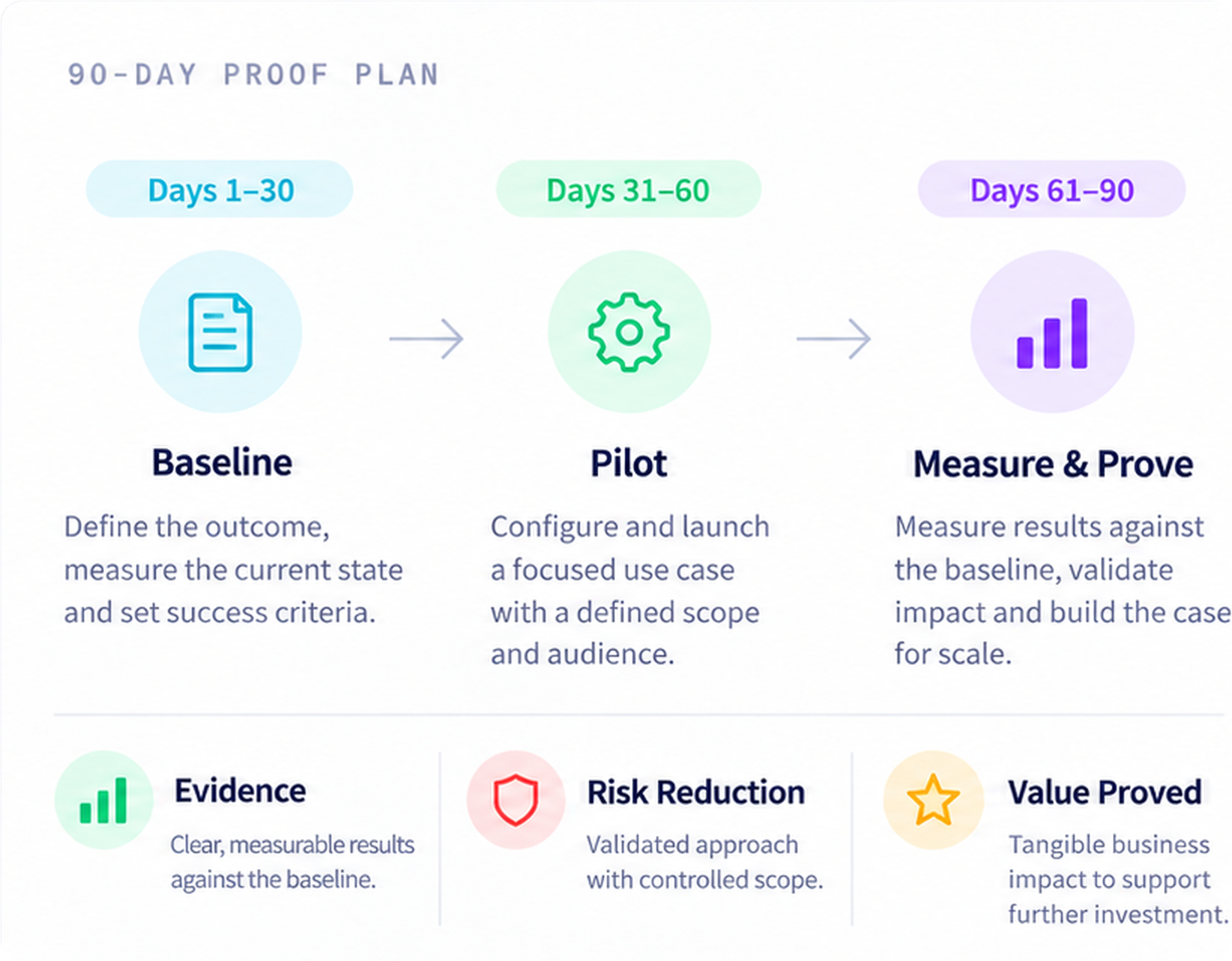
Choose one bounded outcome, record the baseline before change begins and prove whether greater autonomy improves it under control. The purpose of the first cycle is not to reach full autonomy; it is to create evidence that justifies the next decision.
A credible 90-day proof should define the outcome, owner, baseline, control boundary, ServiceNow capabilities involved and the operational measures that will show whether the change worked.
Use the guide to assess readiness, compare the Five Zeros, identify capability and control gaps in your estate, and decide what can be proved next.
Does Crossfuze offer a ServiceNow AI readiness assessment?
Yes. Crossfuze offers a 90-minute AI Readiness Assessment designed to assess the four foundations, identify the practical autonomy ceiling and turn the result into a prioritised next-step roadmap.
Last updated: 13th September 2026
Author: Lee Farnsworth Director, Growth & Market Strategy · Crossfuze


.png)
.png)
